The Unknown Shot
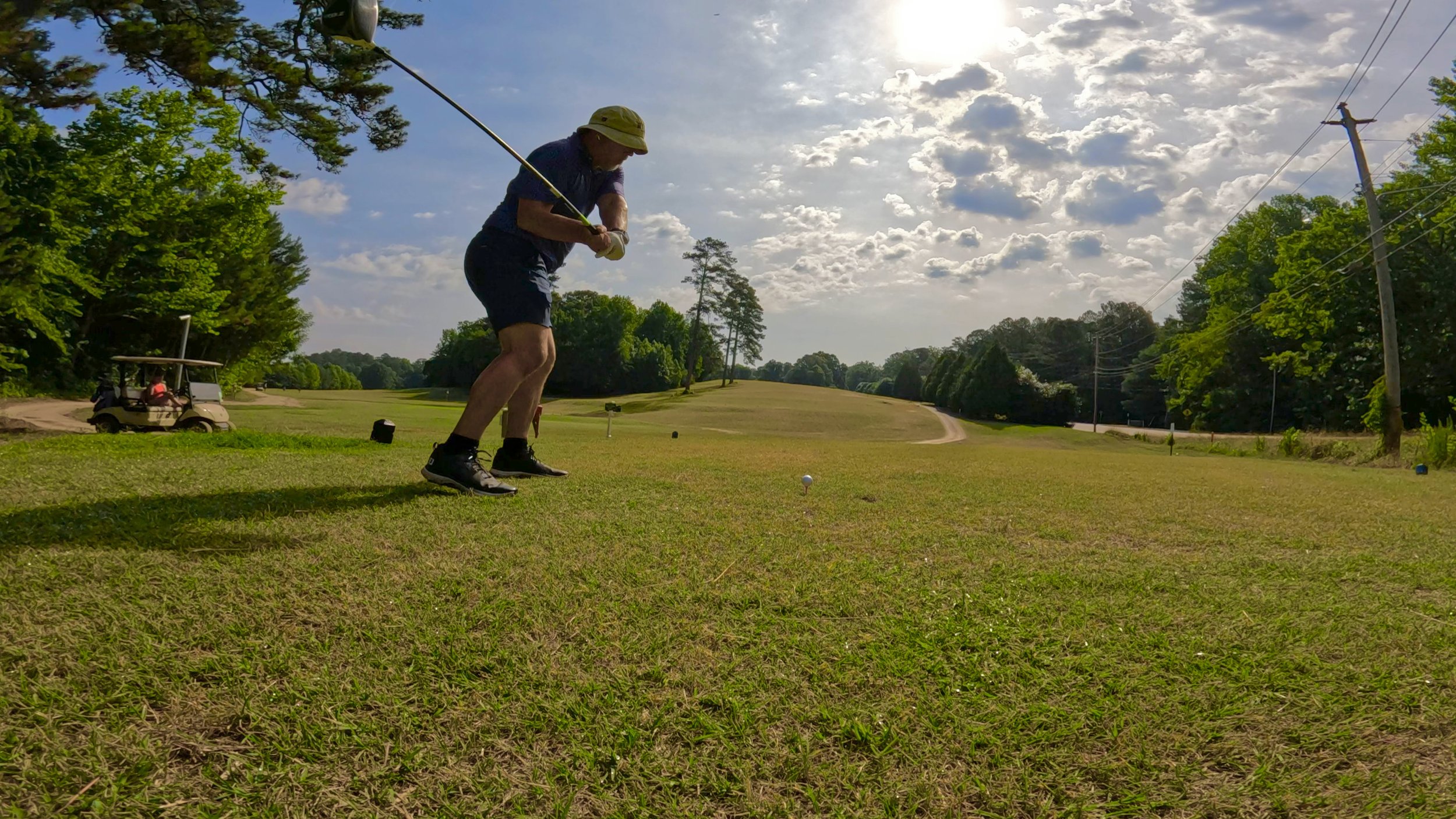
The hardest shot in golf is not the longest one. It is the one where you cannot see the target and have to swing anyway.
I do not flinch at hard. I flinch at the unclear.
I have figured out something about my own game that took me a while to admit.
The long shots do not scare me.
The tight lies, the forced carries, the shots with trouble everywhere — I can stand over those.
They are hard, but they are clear.
I know exactly what I am being asked to do.
The shots that get me are the ones where I cannot quite see the target.
A blind approach over a hill.
A tee shot where the fairway bends out of view.
A green I have never putted before.
The shot where the picture in my head is fuzzy, and part of me is still deciding even as I am already swinging.
That is where it falls apart.
Not because the shot is beyond me.
Because I never fully committed to it.
Doubt does not stay in your head
Here is the part that took me the longest to learn.
Doubt does not stay where you think it does.
It does not sit politely in your mind while your body executes.
It leaks into the swing.
You decelerate.
You steer.
You make a small, protective move at the last instant to hedge against the outcome you are not sure of.
And that hedge — that flinch — is often what produces the miss.
The scorecard then gives you a number.
Your mind turns that number into a story.
“I am not good enough.”
But that is not what the scorecard said.
The scorecard is not wrong.
Your interpretation is.
You were good enough to hit the shot.
You just never picked a target and swung as you meant to.
This is not a golf problem
I see the same thing every week with leaders I work with.
They are usually not stuck on the hard calls.
The hard calls are often clear.
Cut the product.
Make the hire.
Take the meeting.
Have the conversation.
Those decisions have visible targets.
They get made.
The decisions that create the most drag are the unclear ones.
The market that is shifting.
The product strategy that no longer feels obvious.
The role that has outgrown the person in it.
The partnership that might matter, but is not guaranteed.
The move where the data is incomplete, the path bends out of view, and no amount of staring at the deck brings the target fully into focus.
So they wait.
They gather more information that does not actually reduce the uncertainty.
They make a small, protective, half-committed version of the move.
Then they read the result as proof they made the wrong choice.
Same flinch.
Same wrong conclusion.
The problem was never the difficulty.
It was swinging at a target they had not actually chosen.
What changes the shot
I have not fixed this.
I am four weeks from the PGA Playing Ability Test, and I am still working on it.
But one thing has changed the shot for me, both on the course and off it:
You do not need to see the whole target.
You need to pick one.
Commit to a line.
A real one.
Not a vague intention. Not a hopeful direction. Not a swing aimed at “somewhere safe.”
A line.
Then make the same full swing you would make if you could see everything.
Certainty does not precede commitment.
It comes from it.
That is the move I am practicing now.
Not hitting harder.
Not waiting for clarity that is not coming.
Not trying to remove all risk before I act.
Choosing a target I cannot fully see, and swinging like I meant it.
The reframe I would offer you
Your unknown shot probably does not look like mine.
It may not be a blind approach over a hill.
It may be the decision you keep circling.
The conversation you keep delaying.
The next version of your work that you can feel coming, but cannot fully describe yet.
The move is not hard because you lack ability, but because the target is unclear.
That is the shot.
And the work is not to wait until the fog lifts.
The work is to choose the clearest, most honest target you can see from here.
Then commit.
The unknown shot does not get easier.
You just stop flinching at it.
