The Scorecard Does Not Lie
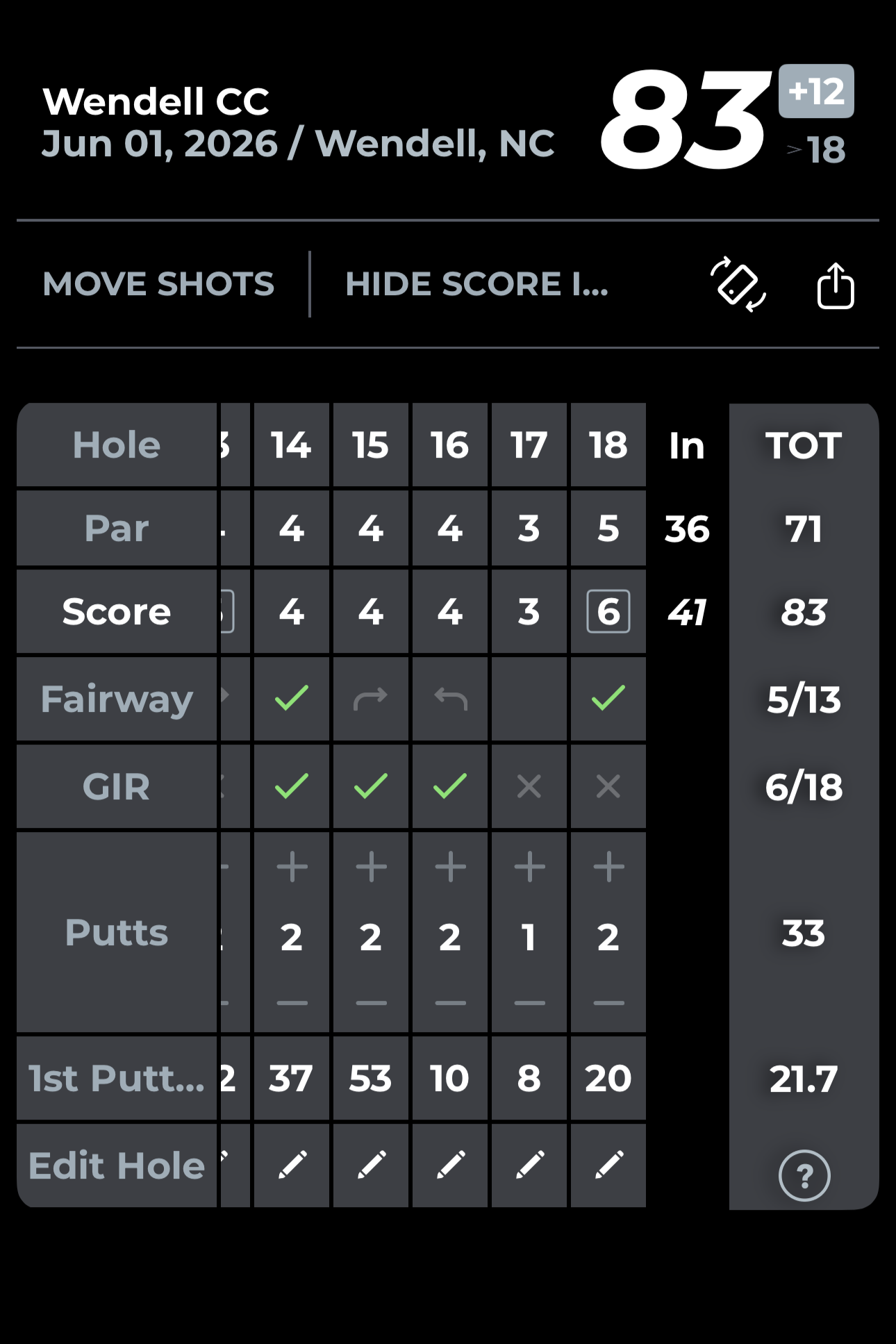
The Card Just Keeps Score.
The season gives you permission to coast. The scorecard never got the memo.
The most dangerous word in golf is “later.”
School is out this week.
You can feel it.
The calendar loosens. The kids are home. The hard, disciplined version of spring gives way to something softer.
Cookouts. Travel. Longer evenings. A general sense that the serious work can wait until things settle down again in the fall.
I love this season.
I am not here to talk you out of it.
But I do want to name something, because golf has made it impossible for me to ignore.
Summer is where progress quietly goes to die.
Not in a dramatic way. Nobody decides to get worse. You just ease off.
One skipped range session becomes three.
The round you used to play with intention becomes a cart, a cooler, and four hours you barely remember.
And you tell yourself the story everyone tells themselves this time of year:
I will get back to it later.
What the scorecard knows
Here is the problem.
The scorecard does not take the summer off.
It does not know it is June. It does not care that the kids are home, the calendar is looser, or that you earned a break after a hard spring.
It records exactly what you did.
No more generously than that.
That is what makes it the most honest object in the game.
Your memory of a round is forgiving. It remembers the one pure 7-iron and quietly edits out the three-putt.
Your sense of “I am still playing fine” is a feeling.
And feelings have a way of drifting upward to protect us.
The card does not drift.
The card just keeps score.
When I started tracking everything in Arccos, the part that stung was not the bad rounds. I knew about those.
It was the slow weeks I had told myself were fine.
The data showed me, plainly, that “fine” and “improving” are not the same thing.
And the gap between them is exactly where most golfers spend their lives.
You cannot coast and improve at the same time.
The scorecard will tell you which one you chose.
It always does, eventually.
Five weeks out, in the season of easing off
I am writing this on June 12.
My PGA Playing Ability Test is July 17.
Five weeks.
It is not lost on me that my hardest stretch of preparation lands in the exact window when everyone around me is easing off.
The pull of the season is real.
There is a version of these five weeks where I let summer soften the work, show up on July 17 undercooked, and have a very reasonable, very sympathetic explanation ready.
The card would not accept it.
That is the gift of a dated, pass-or-fail test.
It removes “later” from the vocabulary.
There is a number. There is a day. And the season does not get a vote.
Most of life does not come with a July 17.
That is exactly why summer is so dangerous.
Without a fixed date holding you accountable, the only thing keeping score is a record you can choose not to look at.
This is not really about golf
I work with leaders who are very good at what they do.
And every one of them has a summer.
Not the calendar kind.
The permission kind.
It is the stretch after a hard quarter when the foot comes off the gas and stays there a beat too long.
The initiative that was urgent in April and somehow can wait until “things settle down.”
The hard conversation that keeps getting pushed because the moment never feels right.
The standards that were sharp in the spring and have gone soft without anyone deciding to lower them.
There is always a reasonable story.
You earned the break.
Things really are quieter.
You will get back to it.
And there is always a scorecard, even when no one is keeping it out loud.
Revenue keeps score.
Your best people keep score.
The market keeps score.
Your body keeps score.
The version of you that set the goal in January keeps score.
The danger of a season of permission is not that you fall apart.
It is that you do not.
You just drift, comfortably, a few degrees off course, for long enough that “fine” becomes the ceiling instead of the floor.
The reframe I would offer you
I am not telling you to skip the summer.
Take the trip. Sit by the water. Play the casual round. Enjoy the cookout.
The break is not the enemy.
The story is.
“I will get back to it later” is how a good spring quietly becomes a wasted year.
The break is fine.
The permission you attach to it is the part worth watching.
So here is the question I would sit with this week, while the season is whispering that the work can wait:
What is your scorecard, and when did you last actually look at it?
Not the flattering memory.
The record.
The thing that does not drift, does not flatter, and does not care what month it is.
Look at it now, in June, while there is still a summer’s worth of time to do something about what it says.
That is the whole difference between people who coast through the warm months and people who quietly use them.
The card is already keeping score.
The only choice is whether you are honest enough to read it.
If that question landed a little too cleanly, that is usually the sign it was the right one to ask.
I would welcome the conversation.
