Where the Similarities Ended
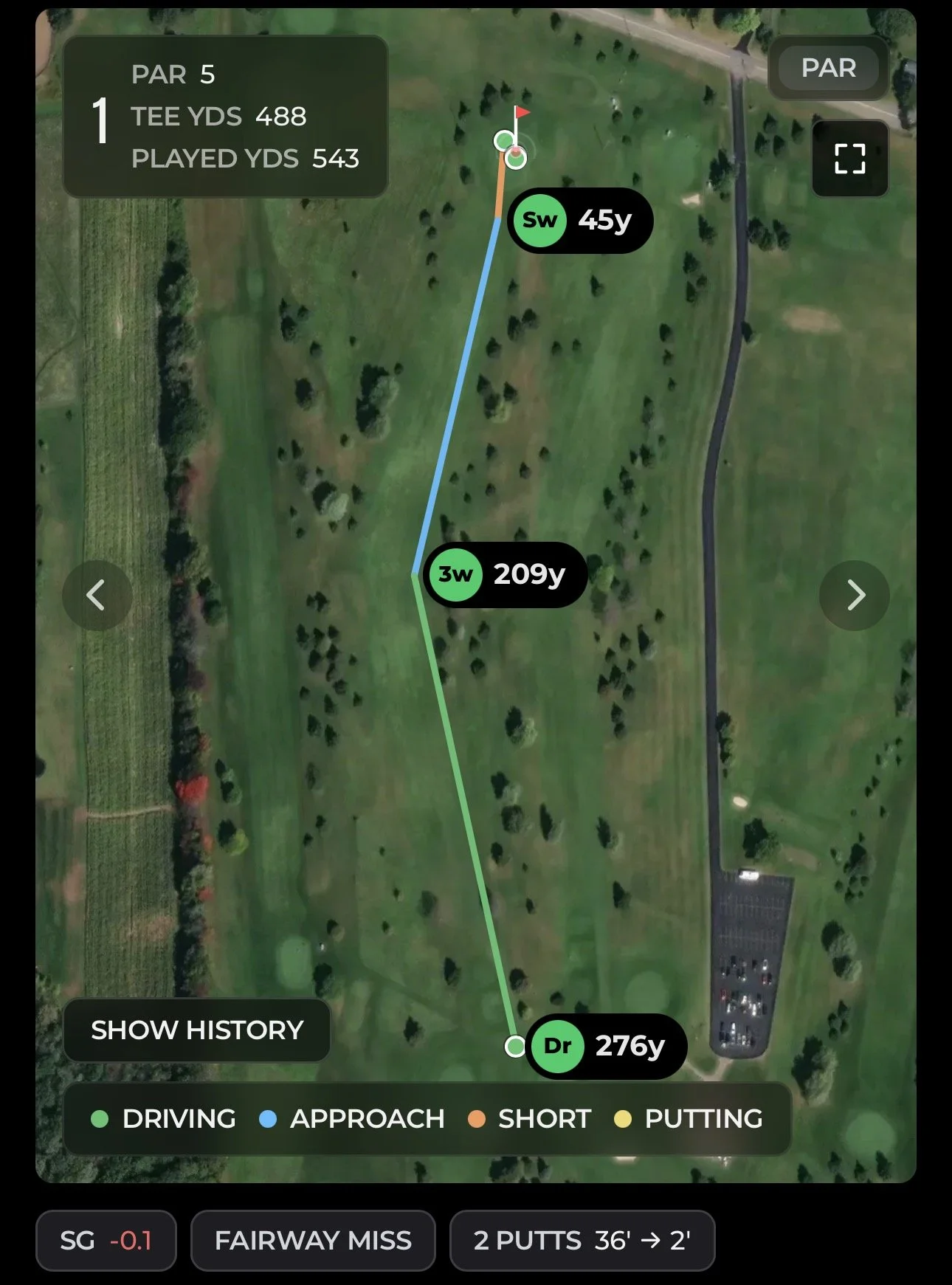
Last Friday I took the PGA Playing Ability Test.
I did not make the number.
I want to start there, because this series has one rule. The scorecard does not lie, and neither do I.
Years ago I trained for and ran a marathon. The months leading up to the PAT felt familiar. The training blocks. The measuring. The progress you can see in the data before you can feel it on the course. The hype. The day-before butterflies.
Driving into the course that morning, I was back at that starting line. The adrenaline. The gun. And we were off.
The PAT began the same way. Warm up. First tee. And we were off.
That is where the similarities ended.
Here is the first thing I learned. The difference between casual golf and competitive golf is not visible from the outside. Good shots look the same everywhere. A pure iron shot on a Saturday with friends looks exactly like a pure iron shot with a scorecard that counts.
The difference is everything you cannot see.
It is the mental focus, holding your attention through every distraction, for every shot, with no round-with-friends autopilot to fall back on. Except I did fall back on it. I caught myself defaulting to casual swings when I was talking, the same loose rhythm I use in a friendly round. The habit showed up before I could stop it.
And the scoring. I had studied the rules. Marker, attest, sign the card. But I had never played a competitive round of golf in my life. Knowing the rules on paper and living them with a card in your hand are two different kinds of knowing.
In my book, I call this friction.
Friction is not exhaustion. I was not tired on Friday. I was rested, prepared, and physically fine. Friction is what happens when patterns that succeeded in one context meet a context they were never built for. The effort goes up. The results do not follow. And no amount of rest fixes it, because rest is not the problem. Alignment is.
My casual swing was not a flaw. It was a success pattern. It served me for hundreds of rounds. It just belonged to a different game, and on Friday it kept showing up uninvited.
I have watched this exact thing happen in careers, including my own. An executive who is genuinely excellent at the work steps into a new context. A bigger role. A board room instead of a team room. A founder's chair. From the outside, the work looks identical. Same skills. Same shots.
What changed is the invisible layer. The stakes, the rules, the rhythm, what happens in your head between the moments that count. The old patterns do not announce that they have stopped working. They just quietly stop working, and the harder you lean on them, the more friction you feel.
That is why "I have done this before" is not the same as "I have done this here."
It is also why practice environments flatter us. My casual rounds measured my swing. They could not measure my ability to hold focus under competitive conditions, because those conditions were never present. Some things can only be learned inside the arena.
I did not make the number. I did make a map. I now know exactly where my patterns and the competitive game are misaligned, not from reading about it, but from standing in it. In the cycle I write about, that moment has a name. Recognition. It is the step most people skip, because it only comes from honest contact with the new game.
The first attempt at a new game rarely produces the old results.
That is not failure. That is the tuition.
