The Old No. 2: A Transformation Story in Motion
Relocating to Wake Forest came with an unexpected gift: a forgotten par-4 golf hole resting quietly behind the trees, waiting for new life. What once served as the old No. 2 of a local course had become an overgrown, almost mythical landscape — a place where time had pressed pause, but potential remained vibrant beneath the brush.
Opportunity is where the transformation began.
Rediscovering a Game — and a Path Forward
After a long break from golf, stepping back onto this old ground felt less like resuming a sport and more like reconnecting with something deeply human: the desire to rebuild, improve, and rediscover what has always been there.
The first swings happened in the old green area, slowly and delicately opened up from years of neglect. Gentle motions. Half-swings. The careful relearning of balance and timing. The simple joy of making solid contact again.
This wasn’t just a return to golf. It was the opening chapter of a larger journey — one mixing restoration, community, and the pursuit of both skill and meaning.
Unearthing What Was Hidden
With each cleared branch and trimmed edge, the land began to reveal itself.
First, the green reappeared.
Then two long-lost sand bunkers emerged from beneath years of overgrowth.
Then 50 yards… 100 yards… 150 yards of fairway slowly came back into view.
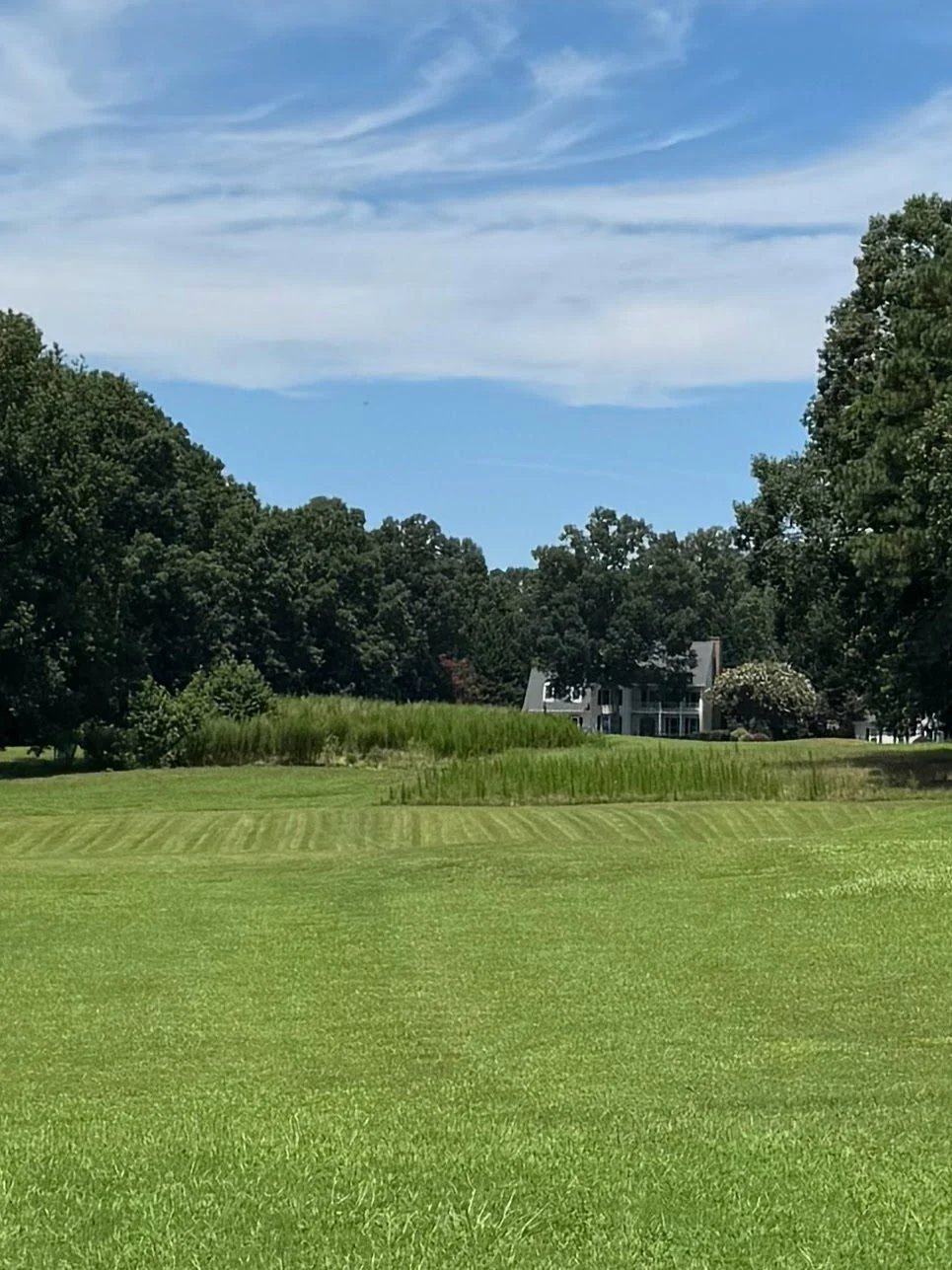
Opening up Phase 2 and 150 yards to the center of the Green.
Progress came the same way it does in golf — and in business:
One intentional swing, one clear decision, one consistent action at a time.
Distance didn’t matter at first.
Perfect shots didn’t matter at first.
Contact mattered.
Clarity mattered.
And from that foundation, momentum grew.
A Neighborhood of Stories
As more of the fairway opened, neighbors began appearing — each with memories, each with stories of when this hole was alive with carts, laughter, and competition in the 1990s and early 2000s.
Clearing land became a way of uncovering history.
Restoring the hole became a way of connecting with the new neighbors, people who once played it, and more importantly building my new community.
A shared narrative formed, woven from old tournaments, family outings, and the echo of a course that mattered to many long before this new chapter began.
Expanding the Fairway — And the Vision
Clearing continued. The fairway widened.
Shots from 150 yards out began to find consistent contact.
The realization set in that a 200-yard, slightly uphill shot is far more challenging than memory suggests — a reminder that every field of mastery has layers waiting to be relearned and respected.
Finally, the tee boxes themselves were uncovered:
Blue: 370 yards
White: 320 yards
Red: 300 yards
Each is still playable.
Each offering its own path.
Each represents a possibility.
And when the driver returned for the first time in 15 years, that old familiar slice made its dramatic entrance — followed, of course, by the classic breakfast ball that found the fairway.
Some truths in life and golf never change… and they don’t have to.
They just need refinement, patience, and practice.
Community Forms Around a Shared Vision
As the final stretch of brush fell away, the last group of neighboring homeowners arrived with new insights — including one who had once been a greenskeeper.
His response was simple and energizing: “If you’re serious about bringing this green back to life, I’m in.”
And with that, the transformation shifted from a solo discovery into a community project.
A team began forming naturally, aligned by curiosity, history, and a shared desire to revive something that still had life left in it.
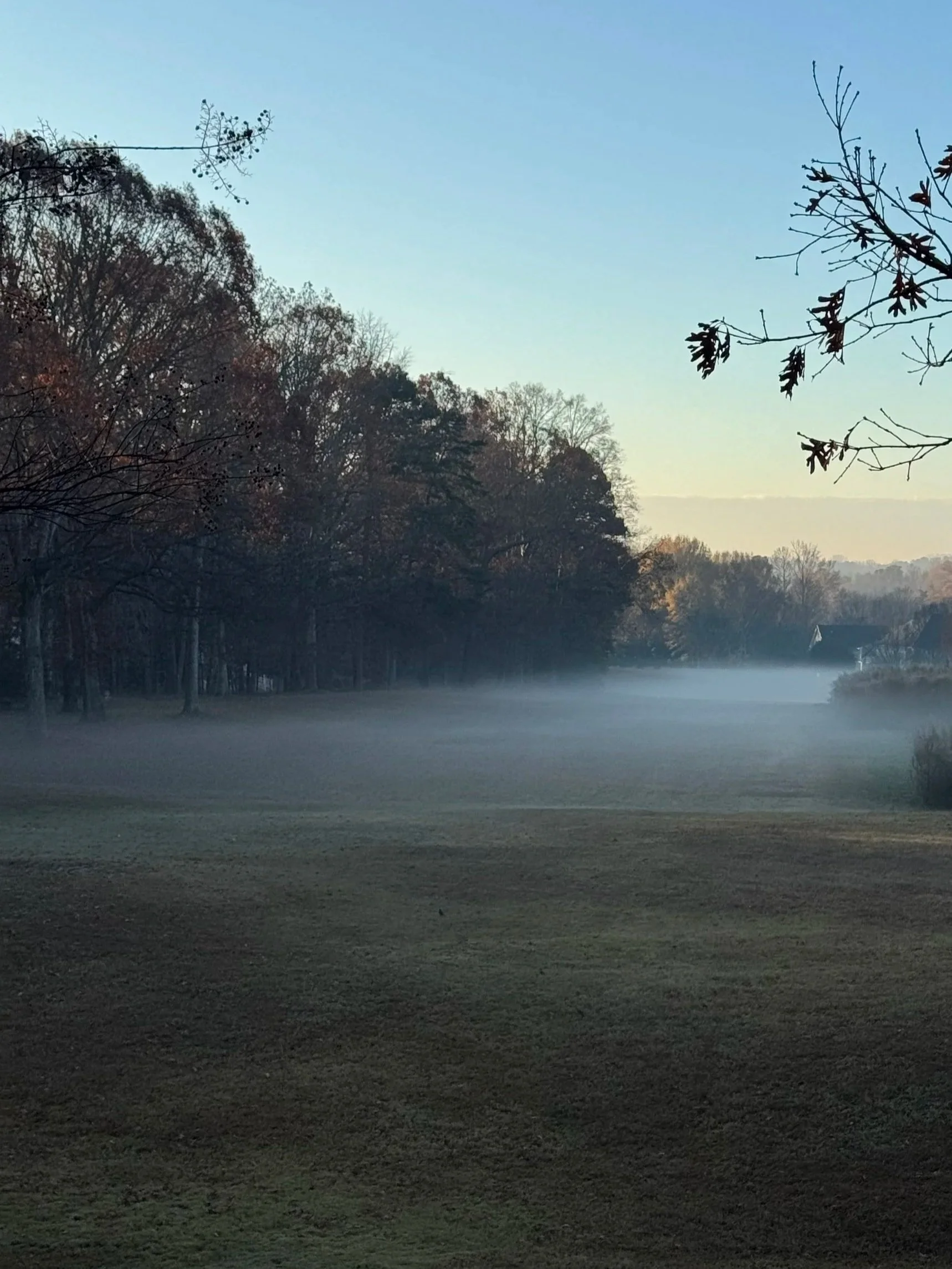
December fog rolling down the open fairway.
Where Golf Strategy and Business Strategy Converge
The evolution of Old No. 2 mirrors the principles that guide strong teams and successful leadership:
1. Clear the Overgrowth First
Before big swings or bold moves, remove the friction — the misalignment, the clutter, the assumptions, the tangled history.
2. Build Consistency Before Power
Success isn’t built on hero shots.
It’s built on repeatable motions, clean contact, and a steady foundation.
3. Listen to the Past to Guide the Future
History is never an obstacle.
It’s a map — offering wisdom, context, and perspective.
4. Every Journey Requires a Real Tee Box Moment
Eventually, the preparation must turn into action.
The moment comes when the path is clear enough to take the full swing.
5. Growth Is a Shared Experience
Like restoring old No. 2, the best work happens with community — with aligned partners, clear communication, and shared purpose.
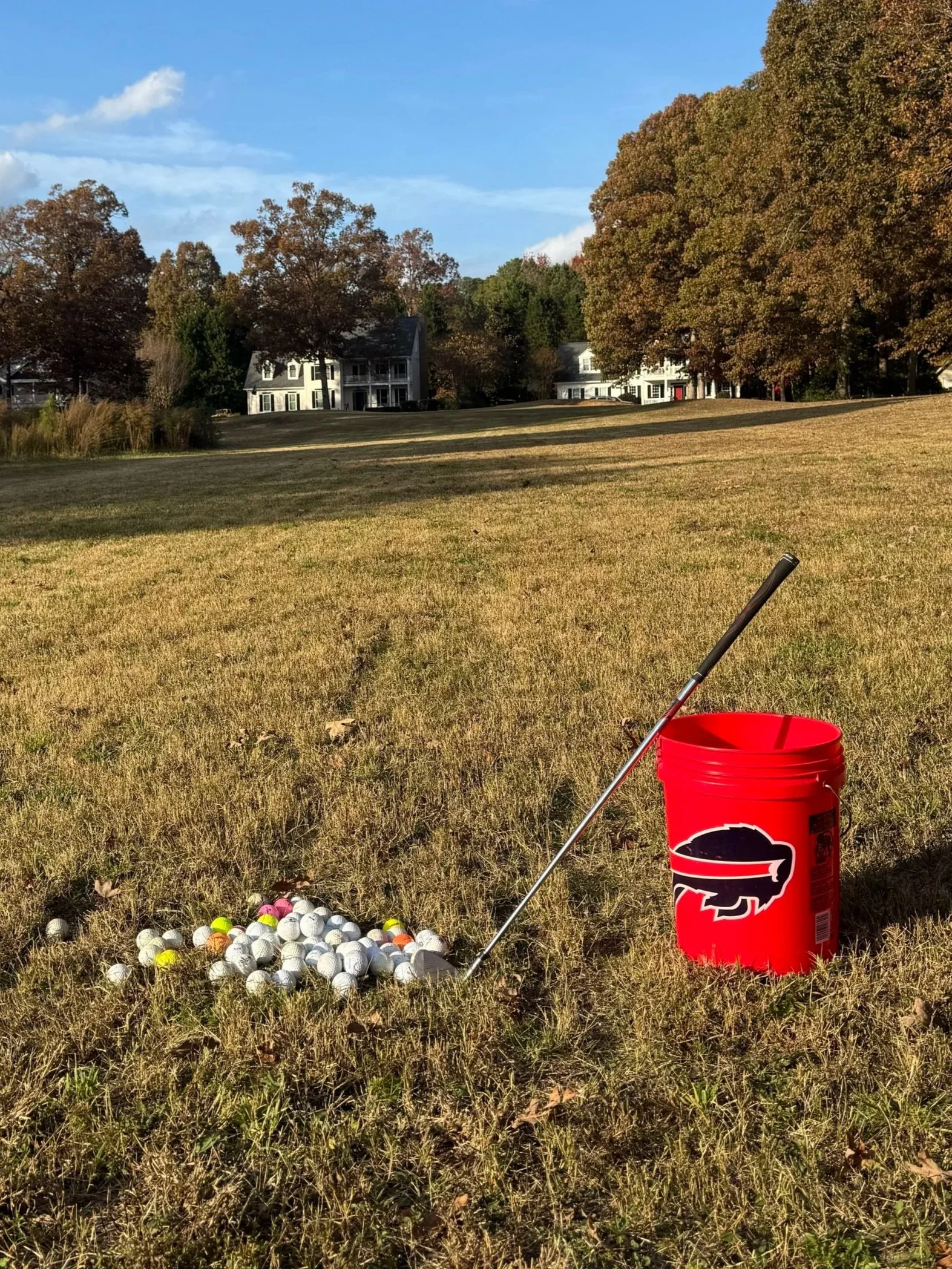
Sunset Short Game Practice
A Blueprint for What Comes Next
The restoration of this forgotten golf hole is more than a project.
It’s a metaphor for transformation, leadership, and the value of meaningful progress.
Everything discovered on this land — the history, the neighbors, the challenges, the breakthroughs — points toward an exciting future where golf strategy and business strategy blend naturally, creating a philosophy grounded in:
curiosity
clarity
consistent improvement
emotional intelligence
community
and a genuine belief in what people can build together
Old No. 2 is coming back.
A coaching philosophy is forming.
And a new chapter is unfolding — one defined not by the past or the present alone, but by the potential of what comes next.
